CYBER Nov 27, 2025 | Comments: 0
Your MFA Means Nothing!
Is MFA a lie? You think that little six-digit code keeps you safe from cyber attacks and identity theft. I'm here to expose the myths, blind spots, and false confidence …
Discover where identity, access, and sharing may be exposing sensitive data in your environment.
I analyze how attackers navigate modern attack paths, using those insights to advise organizations and lead industry discourse on critical security strategy.
Research-driven analysis of privilege, access, escalation, and data exposure.
Authoritative findings, real-world impact, and practical, outcome-driven next steps.
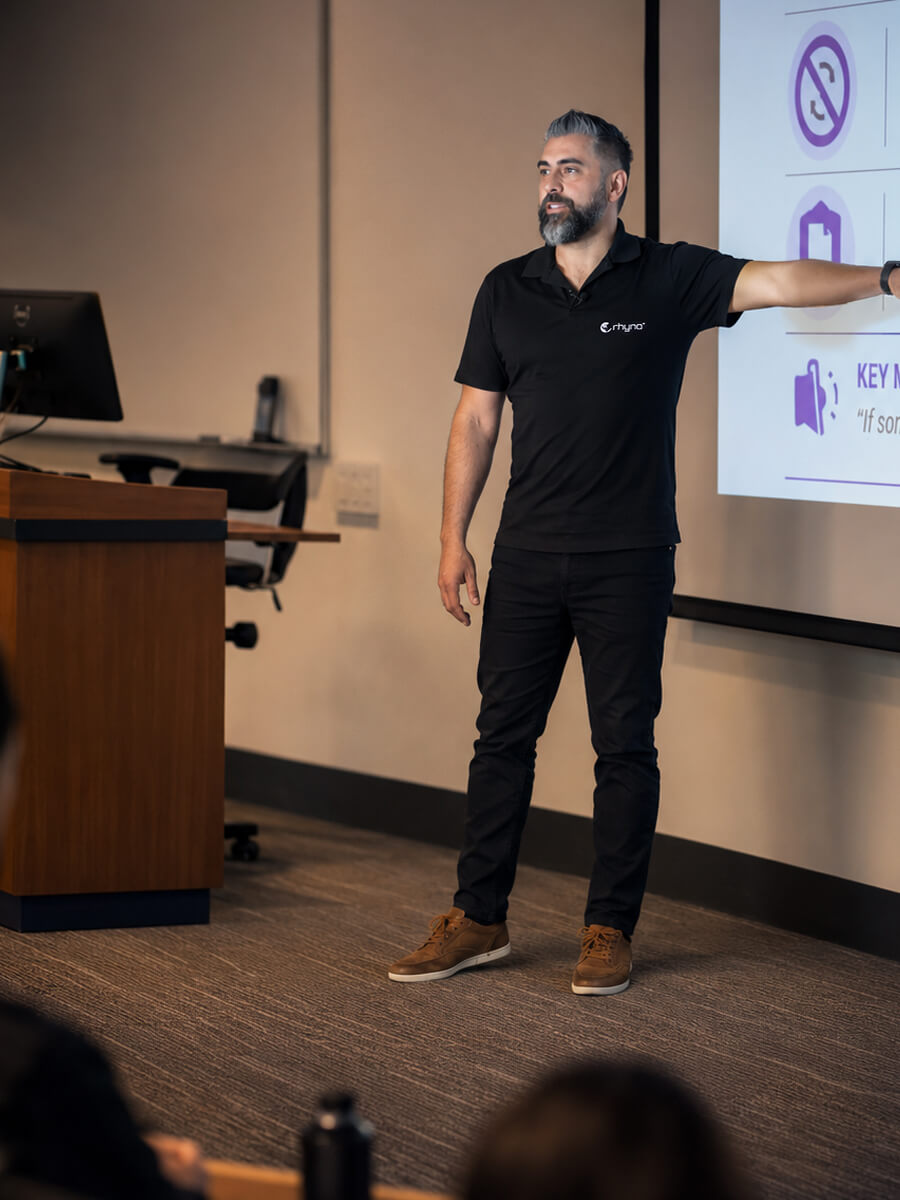
Security work is only valuable if it leads to clear decisions. I bridge the gap between technical exploitation and strategic risk management to ensure your defenses are built for the actual threat landscape, not just a checklist.
I assess your environment by identifying realistic attack paths—informed by my ongoing research into identity compromise, over-permissioned access, and cloud exposure.
Findings are translated into a prioritized roadmap. I help leadership move from technical uncertainty to strategic clarity through research-backed insights.
I avoid long, generic reports and "checkbox" security audits that offer no real protection.
I focus on assessment-first strategies that prioritize deep human insight over automated tool saturation.
You get a concentrated analysis of your actual attack surface and an authoritative path to fix it.
Assessments built to identify meaningful exposure, reduce risk, and provide clear next steps in modern, sensitive, and regulated environments.
Work directly with Dan informed by technical depth, business context, and real-world attack paths.
About DanClear assessments with bounded scope, practical outcomes, and a disciplined approach to risk review.
View AssessmentsGet prioritized findings and next steps that can support remediation, planning, and better security decisions.
Discuss Your RequirementsShort engagements designed to surface high-impact issues without turning the work into a long consulting cycle.
See the ProcessEngage with a recognized voice whose research and insights are followed by over 40,000 industry professionals.
Speaking & WorkshopsAssessments are especially relevant where identity, cloud access, sensitive data, AI use increase security stakes.
Explore Sector FocusWhether you need a focused security assessment to identify critical exposure or a recognized authority to speak at your next event, I provide the technical depth and executive judgment needed to navigate modern risk.
Entry-point assessments designed to identify material exposure in sensitive, regulated, and operationally critical environments.
Review identity, access, and permissions to determine how attackers could move laterally, escalate privilege, or exploit weak control boundaries.
Review AI tools, data access, governance controls, and vendor exposure before rollout to reduce security, privacy, and compliance risk.
Review file sharing, permissions, and cloud access patterns to identify exposed data, oversharing, and control gaps across collaboration platforms.
Review policies, control maturity, security practices, and governance gaps where operational, contractual, or compliance pressure increases the cost of weak decisions.
Most breaches today do not start with infrastructure. They start with identity, access, and data exposure across cloud systems.
A clear process for identifying meaningful exposure and turning it into practical next steps.
We review your environment, current concerns, and operating context to define the scope of the assessment around the areas with the highest potential risk.
We analyze identity, access, cloud exposure, data handling, and other relevant controls to uncover realistic attack paths, weaknesses, and control gaps.
You receive prioritized findings with practical recommendations so you can address the most important issues first and move forward with clarity.
Real examples of risks identified and resolved across client environments.
Broad permissions across finance, operations, and shared systems increased the impact of a compromised account and created unnecessary exposure across critical areas of the business.
A manufacturing organization had accumulated broad user and account permissions over time without enough restriction or review. Access had expanded beyond actual business need, increasing the risk associated with identity misuse or compromise.
The core issue was not just excessive access on paper. It was the ability for one compromised account to move laterally into business-critical areas, exposing sensitive data, operational workflows, and administrative functions that should have been more tightly segmented.
Permissions were reviewed and reduced to better match actual job function, with tighter boundaries between sensitive systems and roles.
A focused access review was conducted to identify over-permissioned accounts, outdated access rights, and weak separation between business roles. Permissions were reduced to match actual responsibility, privilege boundaries were tightened, and segmentation between sensitive areas was improved.
This approach limited unnecessary access paths and reduced the likelihood that a single compromised identity could be used to pivot across the environment.
The organization reduced cross-system exposure and gained stronger control over how identity-based access was managed across the business.
The organization finished with a more controlled identity environment, reduced cross-system exposure, and stronger alignment with least privilege principles.
Internal access was more disciplined, potential attack paths were narrowed, and leadership gained clearer visibility into identity-based risk across the business.
The organization was spending heavily across IT services, software subscriptions, and security tools without clear visibility into duplication, underused licenses, or unnecessary recurring costs.
An educational institution had accumulated a mix of software subscriptions, outsourced services, cloud tools, and security products over time. Many decisions had been made reactively, often to solve immediate operational needs, without a full review of how the overall environment fit together.
The result was growing monthly cost, limited accountability around vendor value, and overlapping tools that created budget pressure without clearly improving service delivery or security. For an organization with finite resources, this reduced the funds available for core mission priorities.
A focused audit was performed across vendors, licensing, services, and recurring technology spend to identify unnecessary cost and recommend practical reductions.
The assessment examined software licensing, managed services, vendors, duplicated capabilities, inactive or underused tools, and areas where spend had grown without enough strategic oversight. Existing contracts and service dependencies were reviewed to separate essential operational requirements from avoidable cost.
Recommendations focused on reducing overlap, consolidating tools where appropriate, right-sizing licensing, and improving decision-making around future technology purchases. The goal was not simply to cut cost, but to reduce waste while preserving operational continuity and necessary security coverage.
The organization gained clearer visibility into where money was being spent and where recurring costs could be reduced without weakening essential operations or security.
By the end of the audit, leadership had a more structured view of technology spending, clearer understanding of vendor value, and a prioritized set of cost reduction opportunities that aligned with the organization’s operational reality.
This created a more sustainable IT model for the institution, improved budgeting discipline, and helped ensure more resources could be directed toward mission-critical work rather than unnecessary technology overhead.
Cybersecurity Researcher | Sr. Risk Advisor
Dan works directly with organizations to identify real attack paths, reduce exposure, and improve security posture across Microsoft 365, modern SaaS, identity, data, and AI-related environments.
Combining technical depth with a recognized industry voice, Dan provides both focused security advisory and authoritative speaking for conferences and leadership events—translating complex risk into clear, strategic action for sensitive and regulated environments.
Experience across cybersecurity, development, systems, and advisory work.
Technical depth combined with business and strategic perspective.
Industry-recognized certifications in security and cloud security.
Practical guidance on identity, cloud exposure, sensitive data, and modern attack paths.
No upcoming engagements available right now.
Is MFA a lie? You think that little six-digit code keeps you safe from cyber attacks and identity theft. I'm here to expose the myths, blind spots, and false confidence …
From unmonitored attack surfaces (Shadow IT, open S3 buckets, old VPNs) to critical misconfigurations in Microsoft 365 and Azure AD, the front door is wide open. Attackers aren't breaking in; …
The Roblox Corporation is once again under intense scrutiny after a harrowing lawsuit was filed by multiple families, alleging that predators exploited the popular gaming platform to groom, extort, and …
AI-assisted development has fundamentally changed how software is built. Features that once took days can now be implemented in minutes. Boilerplate disappears. Refactoring accelerates. Documentation becomes easier to generate. For experienced developers, the productivity gains are undeniable. But as a cybersecurity researcher, penetration tester, and software developer, I do not …
In an era of AI-driven phishing and sophisticated social engineering, "being careful" isn't enough. Dan Duran, cybersecurity researcher and founder of GetCyber, provides a deep dive into the current threat landscape, specifically designed for seniors and their families. Dan will take the lead in providing a comprehensive view of how …
Dan will share a practical, attacker-informed perspective on how organizations are compromised across identity, cloud, and data layers, and what that means for the next generation of professionals. The discussion focuses on the skills that actually translate into value in the field: understanding attack paths, securing access and permissions, and …
The landscape of learning programming languages in 2026 has fundamentally shifted from a "memorization" game to a "verification" game. We are no longer just "writers" of code; we are its architects and auditors. While AI provides unprecedented velocity, the data suggests that using it as a crutch rather than a …
Django's conventional project and app structure is a cornerstone of its "batteries-included" philosophy, fostering rapid development, maintainability, and seamless collaboration. While the initial startproject and startapp commands generate a standardized foundational layout, real-world applications quickly evolve beyond these basics, incorporating a diverse array of files and directories to manage complexity …
Web applications often house their most sensitive data in databases, making database exploration a critical skill for penetration testing and CTF challenges. This comprehensive guide provides methodical techniques for accessing and exploiting database content in web applications when direct SQL injection might not be possible but code execution is available. …
Making it to the top 100 on Hack The Box is no small feat—especially considering the platform hosts over two million talented hackers from around the world. Today, I'm proud to announce that I've reached this elite milestone. Getting here wasn't easy. In fact, it was brutally challenging at times. …
This guide will walk you through installing an Ubuntu virtual machine using QEMU/KVM. Prerequisites Ubuntu ISO file (already downloaded and moved to /home/<USER>/ISO/Linux/ubuntu-24.04.2-desktop-amd64.iso) QEMU/KVM environment set up (from the main tutorial) Step 1: Create the Ubuntu VM sudo virt-install \ --name ubuntu-vm \ --memory 4096 \ --vcpus 2 \ --cpu …
This guide will walk you through installing a Windows virtual machine with QEMU/KVM and setting up the necessary drivers for enhanced functionality like copy/paste, shared folders, and better performance. Prerequisites Before starting, make sure you have: - A Windows ISO file (Windows 10 or 11) - You can download Windows …
This guide will walk you through setting up a complete virtualization environment on Debian 12, including QEMU/KVM for virtual machines, Cockpit for web-based management, and SPICE for improved virtual desktop performance. While this tutorial focuses on Debian 12, these instructions should work on any Debian-based distribution with minimal adjustments. Prerequisites …